It is important to consider all walks of life and make sure that the space that you are designing is accessible to all people, catering to all ages and all physical abilities. A large component of this is catering for people who have disabilities.
First of all access into the space needs to be considered. So for example providing lifts and ramps for wheelchair access. In my scenario a lift to cater for not only wheelchair bound people but elderly people who may not be able to take on too many steps. Just providing that extra option if needed is important.
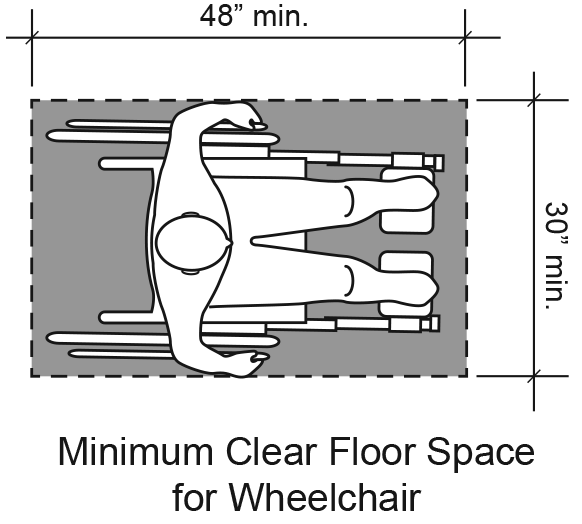
Larger toilet cubicles also need to be considered, especially when it comes to wheelchair access. It is compulsory in all public spaces and venues to provide a larger toilet space that includes aid such as railing around the toilets. Compulsory dimensions for a disabled toilet state that the room needs to be at least 2200mm in length and 1500mm in width. These are of course just the minimum requirements. Dimensions larger than these will give a wheelchair user a larger turning circle, providing greater comfort.
I will make sure to follow these guidelines when it comes to designing the bathroom area. I will also make sure that all hallways and access points are wide enough for both a wheel chair user and another person to pass by comfortably.

 AUT SPATIAL DESIGN